THINK | DISCUSS | WRITE | EDUCATE
CAUCUS



.jpeg)
Yuvamanthan United Nation Model (YMUN)
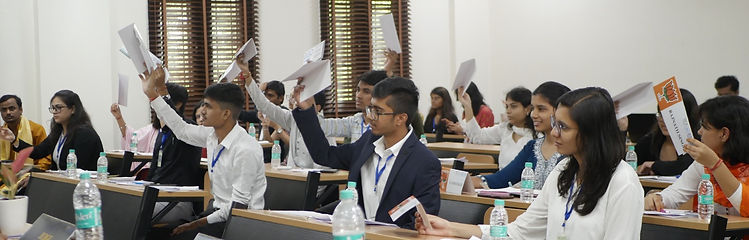
On the 27th and 28th of August, the Viksit Bharat Ambassador Club of Hindu College organised the Yuvamanthan Model United Nations. The theme for this event was: “Lifestyle For Environment”. This Model United Nations had two committees: the 2024 United Nations Climate Change Conference ( COP29 ) and the All India Political Parties Meet. This way, the conference allowed the students to participate in either a national or an international committee, to gain exposure to the diverse ways in which policy and politics intersect. The agenda for the AIPPM conference was: “State of Disaster Mitigation and Management in Light of Recent Tragedies”. The agenda for the COP29 conference was: “Promoting Sustainable Consumption and Behavioral Changes through Policy and Incentives”.
The COP29 conference was held on the 27th of August, while the AIPPM was held on the 28th of August. Nearly 100 students participated in this event in multiple roles: as delegates, secretariat members, executive board members, members of the organising committee, photographers, and report writers. A committee of over 10 faculty advisors coordinated and guided their efforts to bring the event to fruition. Both the committees were judged by internal as well as external judges. On both days, eminent environmental scientists served as the external judge. On the 27th of August, Dr Vandana Maurya, a prolific science communicator and environmental scientist graced the day as the external judge. On the 28th of August, Dr Saurabh Sonwani, Head of South Asia & Middle East Network, iLEAPS ( Integrated Land Ecosystem-Atmosphere Processes Study ), Global Research Project of Future Earth, graced the day as our external judge.
Both the committees were a resounding success, with the delegates coming to a constructive consensus, presented in the form of a press release, released by each committee. The Delegate of Germany was judged to be the Best Delegate in the COP29 committee, while the Delegate of China was awarded high commendation in the COP29 committee. In the AIPPM, Narendra Modi was judged to be the Best Delegate, closely followed by Dr Shashi Tharoor, who was awarded high commendation.
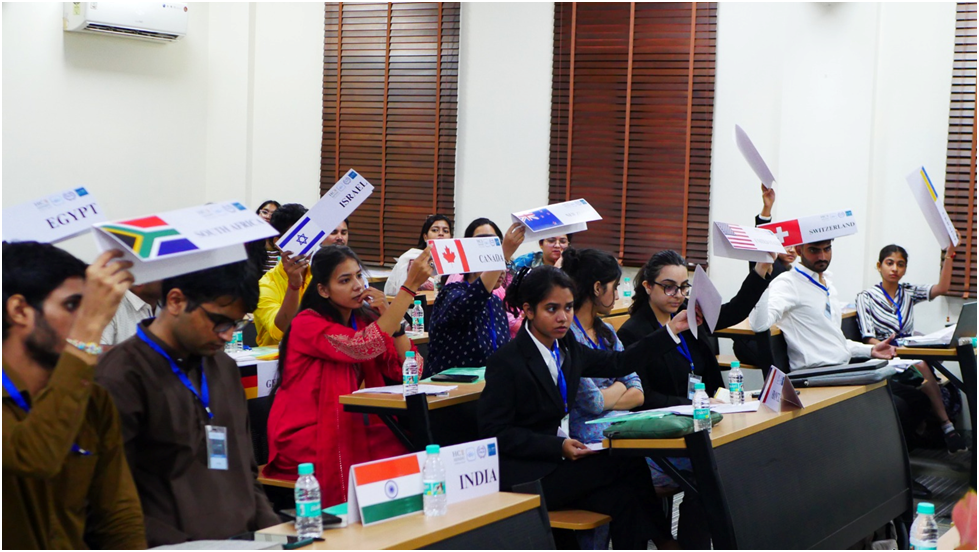

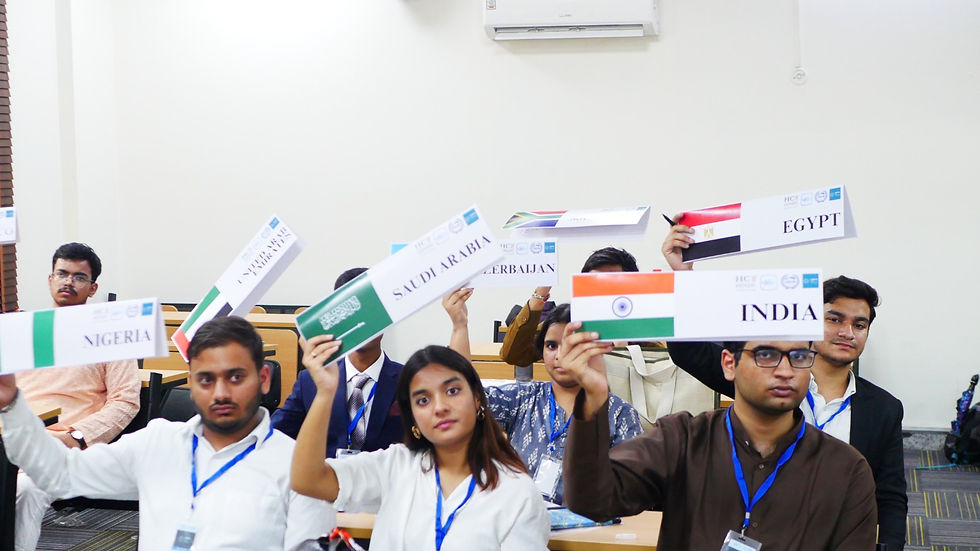
27 August saw the commencement of the event with the COP 29 committee, a committee of 24 delegates representing the countries of China, Egypt, Israel, Germany, Pakistan, France, South Africa, Türkiye, Canada, the United States of America, United Kingdom, India, Nigeria, South Korea, New Zealand, Saudi Arabia, Australia, Switzerland. Brazil, Mexico, Azerbaijan, United Arab Emirates, Ukraine.
The agenda for COP29 was ‘Promoting sustainable consumption and behavioural changes through policy and incentives’. The committee was chaired by Miss Chavi Gogna and Mr Pranshu Sharma. Dr Vandana Maurya, a prolific science communicator and environmental scientist graced the day as the external judge. The internal judge for the day was Dr Pallavi Saxena, assistant professor of environmental sciences, Hindu College, University of Delhi. was our internal judge for the day.
The program began with the delegates making opening remarks through the General Speaker's List (GSL). Several moderated sessions were organised post the GSL, covering topics such as: ● Electrifying Change: Tax Incentives Driving the Electric Vehicle Revolution: The delegates discussed the potential impact of tax subsidies on promoting the adoption of electric vehicles and reducing carbon emissions in the transportation sector. They explored various policy options and incentive schemes to encourage individuals to switch to more sustainable modes of transportation. The delegate of Germany notably emphasised the urgent need for tax subsidies on electric vehicles to accelerate their adoption. ● Farming for the Future: Climate-Resilient Agriculture and Sustainable Irrigation Techniques: The delegates engaged in discussions on strategies to make agriculture more resilient to the impacts of climate change. They examined sustainable farming practices, such as crop diversification, water conservation techniques, and the use of climate-smart technologies, to enhance food security and mitigate the effects of extreme weather events. The delegate of India recognized the challenges posed by climate change, particularly in the field of agriculture. They proposed integrating climate-resilient practices into their farming systems, such as rainwater harvesting and crop rotation. ● Legislation for Gender Equity and CSR in the Workforce: The delegates focused on the importance of promoting equitable employment opportunities across all genders. They discussed policies and initiatives that could be implemented to address gender disparities in the workforce, such as providing equal pay for equal work, offering parental leave benefits, and creating mentorship programs for women in leadership roles. ● Blockchain for a Greener Tomorrow: Transparency in Sustainable Markets and Carbon Tracking: The delegates collectively acknowledged the transformative potential of blockchain technology in promoting transparency in sustainable markets and carbon tracking. They agreed to collaborate on developing frameworks and partnerships that would enable equitable access and effective implementation of blockchain solutions across all nations. The delegate of Germany mentioned that by utilising decentralised ledgers, carbon credits can be tracked and emissions can be reduced. Two unmoderated discussions were also held before refreshment breaks wherein the delegates lobbied with each other and had other pertinent discussions relevant to drafting the committee resolution. The delegates worked collaboratively to draft a resolution that addressed the key issues and proposed actionable solutions. The resolution was put to a vote and passed by a majority. The best delegate award was presented to the delegate of Germany, while the delegate of China received a high commendation for their outstanding performance in the committee.
AIPPM Report
On 28 August, the AIPPM event began with a committee of 24 delegates from various political leaders, including Narendra Modi and Rahul Gandhi. The main agenda discussed was the "State of disaster mitigation and management in light of recent tragedies. " Mr. Pranshu Sharma and Miss Chavi Gogna chaired the committee, with Dr. Saurabh Sonwani acting as an external judge and Dr. Krishna Pathak as the internal judge. The program opened with delegates making remarks through the General Speaker's List, followed by moderated sessions on multiple topics. One session focused on urban planning and sponge cities, linking the concept to the Smart City Mission. Another session addressed the need for decentralizing disaster response to empower local units. Delegates also discussed incentivizing local innovations for disaster management, referencing the recent Wayanad disaster. Two unmoderated discussions helped delegates draft a resolution that was later voted on and passed. The delegate representing Narendra Modi received the best delegate award, while Dr. Shashi Tharoor’s representative received high commendation.